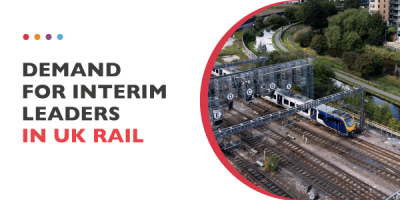
The UK transport industry is going through a period of major change – but an ageing workforce and difficulty in recruiting new workers have left the sector facing a major skills gap.
An estimated 120,000 high-skilled jobs are set to be created in UK rail over the coming decade, at a time when many rail workers are approaching retirement and the industry struggles to convince younger and more diverse workers that a career in rail is for them.
Our infographic lays bare the scale of the skills shortage in UK rail and its effects on the industry. It also looks at how recruiters can help to address the skills gap in the railway sector.
Click here or on the image below to download our infographic on the skills shortage in UK rail.
Nina Lockwood
Chief Executive Officer
Share
WE would love to get to know you!
Please do give us a call, drop us a message or follow us on Linkedin!
We are looking for a Head of Client Relationships to strengthen partnerships, develop new client relationships and represent Intuitive across the transport sector.
Read about how an Intuitive introduction led to an international relocation and a move from aviation into rail, helping build a long-term senior rail leadership career.
The biggest challenge of rail reform sits with recruitment: plugging the skills gap and bringing in people to deliver a railway that operates at its best.
If you’re an employer and you use the services of contract workers who operate via intermediaries, IR35 has big implications for you and your contractors.
As an interim, you must understand how IR35 works, as well as how – and when – it applies to you. In this guide, we’ll take a closer look at what IR35 means for candidates.
The Intuitive team has been out and about, mixing with transport industry leaders, and keeping our ears close to the ground for the latest developments.
Being neurodivergent-inclusive brings benefits both to employee wellbeing and your business. But how do you create a neurodivergent-friendly workplace?
Recruiting interim candidates is a good way of bringing in specialist expertise, offering flexibility and a diverse breadth of experience as well as cost-effectiveness.
As with any other employee, new executives need support as they adjust to their new role so that they can perform to their full potential. But how long is long enough?
As with any other employee, new executives need support as they adjust to their new role so that they can perform to their full potential. But how long is long enough?
To be an effective interim executive, you need a particular skill set that equips you for the challenges you’re likely to encounter. Here’s what to develop – and to promote.
if you’re on the lookout for a new executive role – whether it’s your first job at this level or you already have some senior-level experience – hare some top tips to bear in mind.
Recruiting for executive roles is never an easy business, but choosing the right interview format for the position and your organisation can make it easier.
Intuitive’s first decade has been magical. Here are the highlights, from bringing new faces into the sector to hosting a hit podcast and winning Executive Recruitment Agency of the Year.
In-person interviews are far more fluid than they used to be – especially for senior leaders. Here are four ways to adapt your interview style for senior leadership positions.
A positive attitude can be a real divider when it comes to professional success and can improve confidence, relationships and the speed at which you achieve your goals.
Authentic conversations help uncover the real person behind an impressive CV, and are paramount to matching the right candidate with the right enterprise.
We share three fantastic questions that every transport leadership candidate should ask during the interview process. Revealing answers are guaranteed!
How can your transport organisation tap into cross-sectoral talent and identify leadership potential? We explore strategies for finding talent and 5 specific characteristics to look for.
Why connecting with clients with candidates from outside of the transport sector is important and how it can benefit your organisation. We share 4 interesting advantages.
Reverse mentoring empowers less senior, younger, or more unconventional employees to share their knowledge and experience with more senior, conventional, and oftentimes older colleagues.
Unconscious bias has been associated with career challenges for those from diverse backgrounds, and when left unchecked, can affect workplace inclusivity.




 Read more